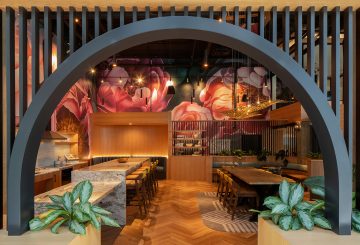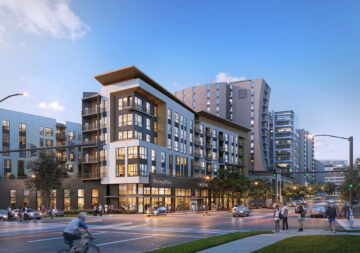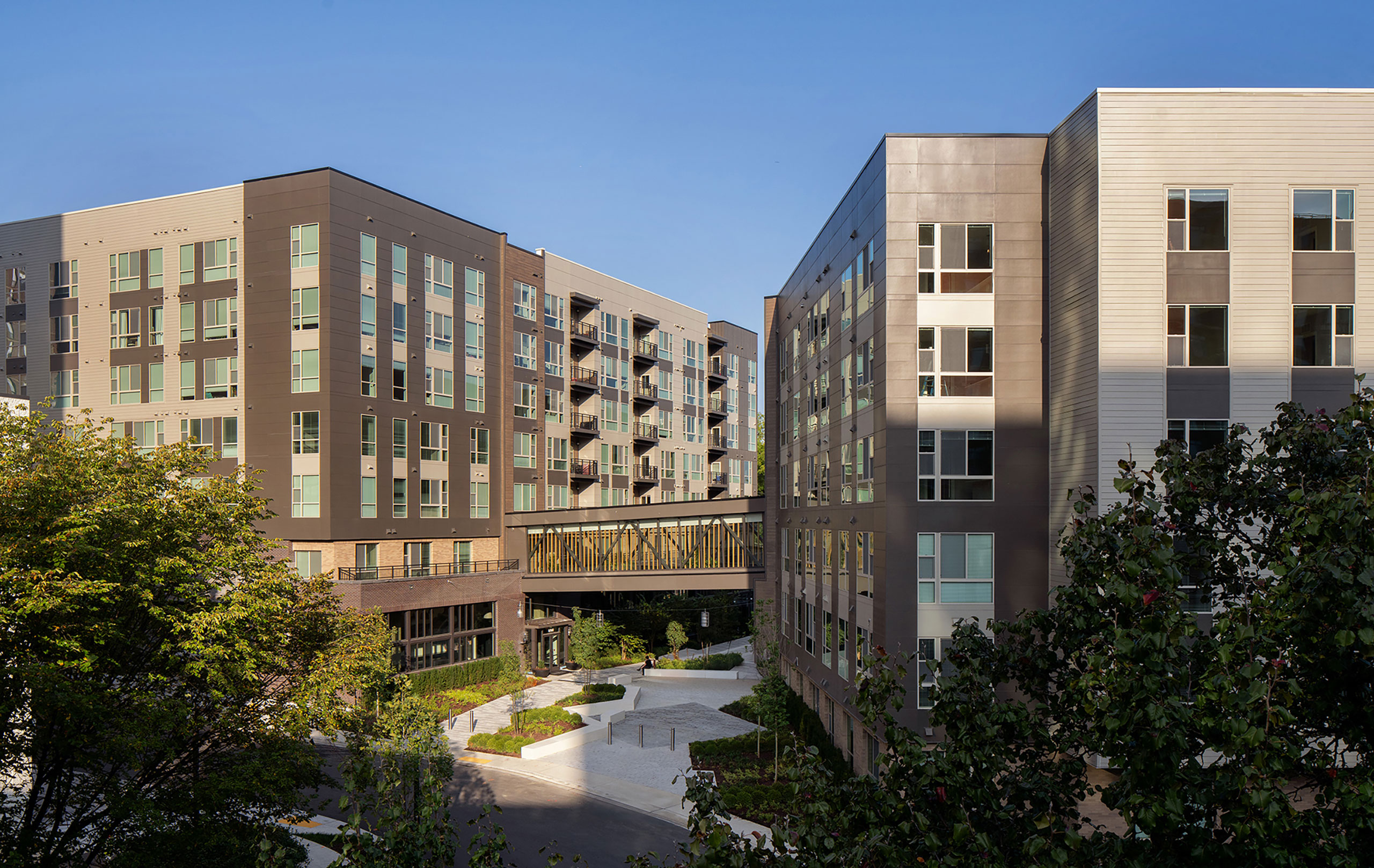


The structures connect through a sky bridge and sub-grade structure. A restrained but intricate design brings D.C. commuters, new neighbors and their families together with long-term residents in a timeless example of how design can enrich and enliven neighborhoods; what makes this award-winning development impactful is not any one element, but how each piece unites.
This design creates a soft transition between the residential neighborhoods and downtown in a way that garnered excitement from neighbors early in the process. Planting mature trees obscures the view of the new development from the established neighborhood. Designers set Atwell on Spring back from the street and stepped it up, away from the neighborhood. Additionally, the townhome-style units with entrances along the street and public mews mirror the existing homes and complement the adjacent urban parks.
Engagement picks up on the downtown-facing side of the building with active retail frontages engaging the ground plane, and a distinct roofline that responds to the scale and energy of downtown. Aesthetics aid this transition in an interplay of a heavy yet understated grid skin and a softer, more playful staggered grid, with the two melding at tapered building projections.
Running quietly through the development is a foliage lined public mews that invites neighbors and commuters alike to engage with the new development as they make their way to downtown Silver Spring or the nearby Metro station. Soaring over the mews a glass-enclosed sky bridge, subtly slanted to address the site’s slope, joins the buildings and unites common gathering spaces enhances by a robust art program.
Residences ranging from studios to two-bedroom townhome style units lay the foundation for a diverse mix of residents, from young professionals to new families. Expansive windows flood the units with light and establish visual connections to the surrounding area.
A sub-grade structure thoughtfully balances residential and retail parking, loading docks and mechanical rooms. The building height is limited to 85 feet, and because emergency access is paramount, fire lanes were created on the tight infill site and the building corners were chamfered to preserve access.
All the technical details lend themselves to exceptional design. Public and private spaces reflect each other; the mews is activated by residential courtyards and amenity spaces. Mechanical systems, HVAC, vehicle and pedestrian circulation are purposefully wound to achieve the right balance of connectivity and privacy. The complexity of this development presented an exciting challenge for our design team who mixed wood and concrete, contemporary and local aesthetics, coordinated the many contractors and consultants, while also encouraging feedback from the county and from neighbors.
The arrangement of spaces and essential building functions create a mixed-use development that gives each of its features the room to perform well and invite connections. The joy in architecture is not always in broad and sweeping design moves, but in the precise and intentional arrangement of pieces. There is always a place for striking aesthetics and bold moves, but what makes places last is how well they serve the needs of everyone in the community while making room for its newest members.
Project Details
Facts
Unit Plan Sizes: 489-1,539 sq. ft.
Number of Units: 375 du
Site Area: 3.24 ac
Retail: 28,648 sq. ft.
Number of Stories: 7 & 8
Parking: 386 spaces (1.02 sp/du)
Construction Type: I, III
Project Team
- Bozzuto Group
- KTGY
- Grizform Design Architects | Wyn Design Co
- MPFP
- Bohler Engineering
- Bozzuto Construction Company
- Seamus Payne | John Cole
Awards
- Silver Award | Best Mid-Rise Apartment Community, For Rent (6 to 9 stories)
- Winner | Best Design and Architecture, Multi-Family New Construction, Mixed-Use
- Award of Excellence | Best Mixed-Use Project
- Platinum Award | On-the-Boards Multifamily Project
- Merit Award | Best On-the-Boards Mixed Use Project