California buildouts get a power upgrade — and a new set of challenges.
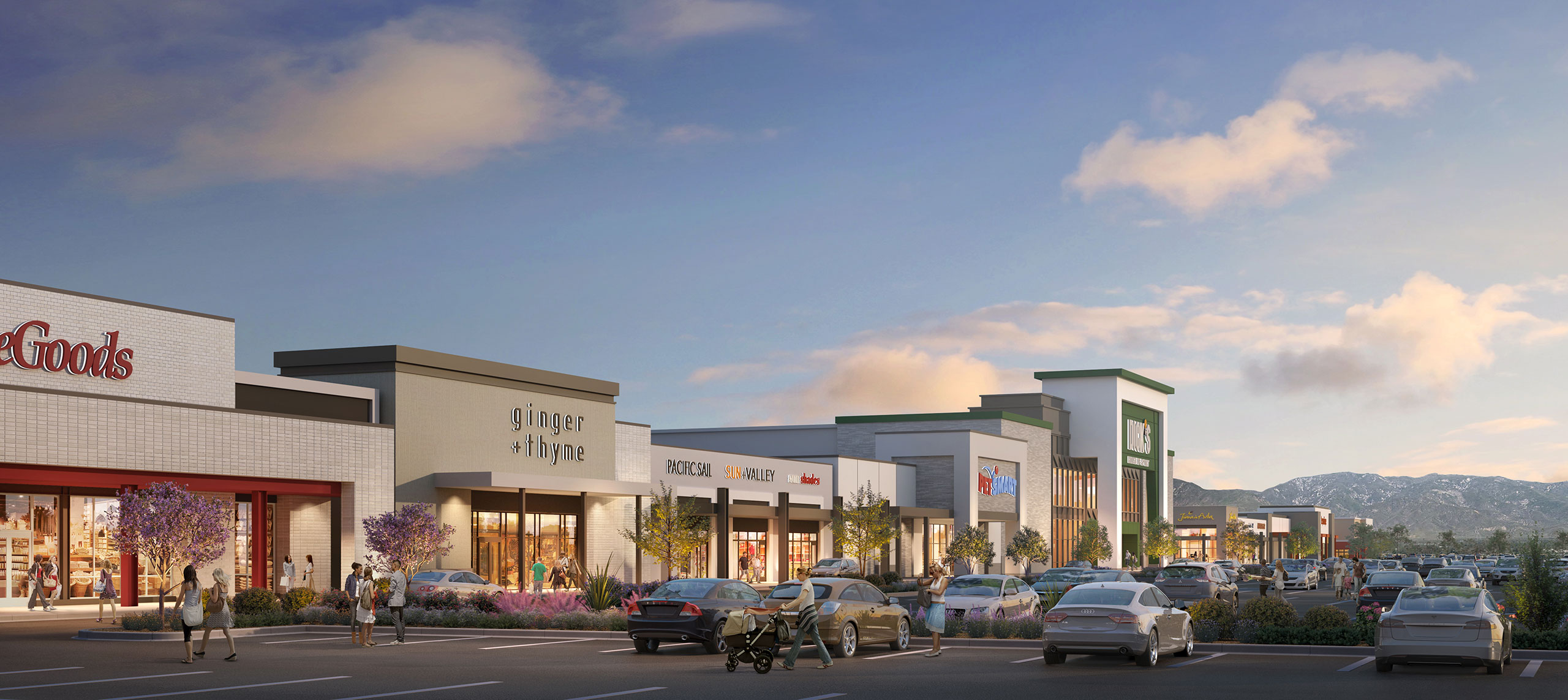
The two items development teams are always trying to manage — time and cost — are getting a whole lot harder to control due to California’s updated Title 24 Energy Code. This code, which is updated every 3 years, sets efficiency standards for building systems like HVAC, lighting and electrical infrastructure across the state. The latest version took effect Jan. 1, 2026, and requires all newly permitted projects to include higher-efficiency systems, expanded electrical capacity and added testing to make sure everything works as intended.
In essence, it’s adding more of those dreaded two items to many projects.
“The practical result is a compliance environment that has materially raised the cost, complexity and schedule risk of California buildouts compared to any other state,” says Isaac Ayala, director of operations at Donlon Builders.
Ayala has seen the impacts of this energy code update in action. Donlon priced a new ground-up QSR project in late 2025, but the client was unable to submit plans to the city before the New Year.
“The electrical engineer’s one-line had to be redesigned entirely since the client’s national prototype was drawn to an 800-amp service for the whole building but [the updated code] requires 800 amps to the cookline panel alone,” Ayala explains. “That redesign added 3 weeks and approximately $45,000 in electrical scope before it broke ground.”
A similar situation recently played out on a 2,400-square-foot fast-casual restaurant in the Inland Empire. The heat pump premium, EV infrastructure and panel upgrades added roughly $80,000 to the MEP scope versus what the client’s prototype budget assumed. “That’s before the compliance documentation and testing,” Ayala adds.
WHERE PROJECTS ARE BREAKING DOWN
The time and money disruption is most prominent at the infrastructure level, where electrical capacity and system requirements are complicating decisions that were once relatively straightforward.
“What used to be a 2-week mechanical sub scope now starts with an electrical engineer, a utility application and a 3-month wait for the local utility provider’s queue to clear,” Ayala adds. “The mechanical work hasn’t changed. Everything around it has.”
From upgrading electrical capacity to accommodate heat pumps, to installing EV charging infrastructure and redesigning store prototypes to meet new panel and load requirements, it seems the latest energy code iteration has certainly brought about changes.
“We’re now designing for substantially higher electrical panel loads and larger transformer capacities to accommodate PV systems, EV charging and the new HVAC efficiency standards,” says Brandon Wernli, studio director for KTGY’s Retail Studio. “These requirements fundamentally change how we plan building systems from Day 1, especially for retail and restaurant tenants that already operate with high energy demands.”
The impact of these changes isn’t just more time or money. It can sometimes influence whether a project moves forward at all.
“The greatest challenges are emerging early in the underwriting and due diligence process as developers evaluate what it will take to bring older buildings or repositioned space up to current code,” says Bill Asher, executive vice president of Hanley Investment Group Real Estate Advisors. “When these costs surface, they can materially change a project’s feasibility and, in some cases, delay or prevent a tenant commitment — which ultimately affects the developer’s timeline and the asset’s exit strategy.”
It can also affect negotiations. Asher notes tenants are encountering higher buildout costs when their prototypes require additional HVAC, electrical distribution or kitchen exhaust to meet current code. Meanwhile, developers are absorbing higher upfront costs tied to electrical infrastructure, larger transformer capacity, EV charging and full electrification, on top of the broader rise in construction costs.
“Tenants are requesting higher tenant improvement packages or landlord contributions when electrical or HVAC systems need to be replaced, which directly influences lease structure and, ultimately, exit pricing,” Asher adds. “We’re also seeing more creative lease structures, including amortizing tenant improvement costs over longer terms and offering targeted landlord contributions for code driven upgrades.”
For Justin McMahon, senior vice president in retail properties leasing and sales at CBRE, time has been the biggest negotiation point on the table as of late.
“We’re spending more time negotiating rent commencement dates than almost any other lease term,” he says.
Fortunately, he’s witnessed an uptick in collaboration between landlords, tenants and city staff to keep projects moving.
“In some cases, landlords will indemnify tenants for plan preparation before lease execution so plans can be submitted earlier and rent commencement timelines can be shortened,” he continues.
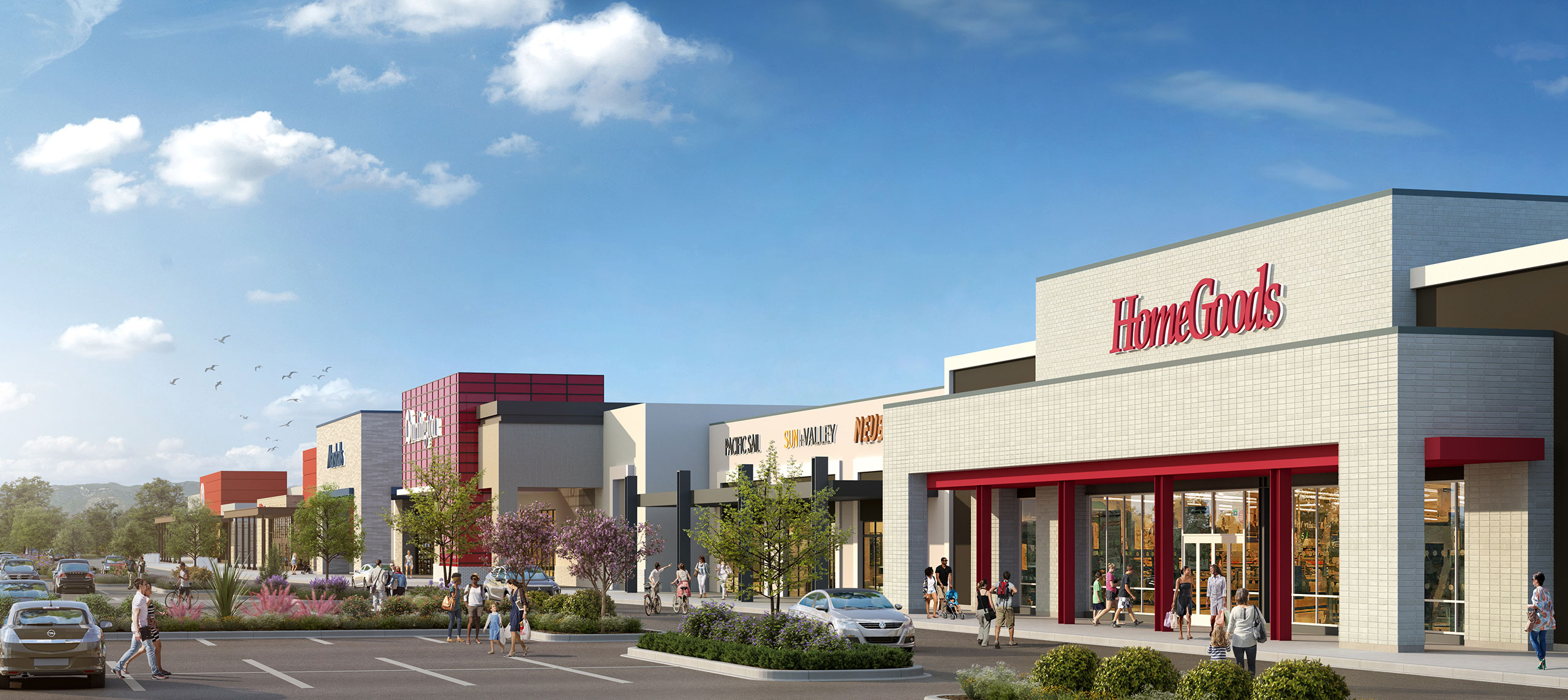
Rendering of Crossroads Plaza in Bakersfield, California.
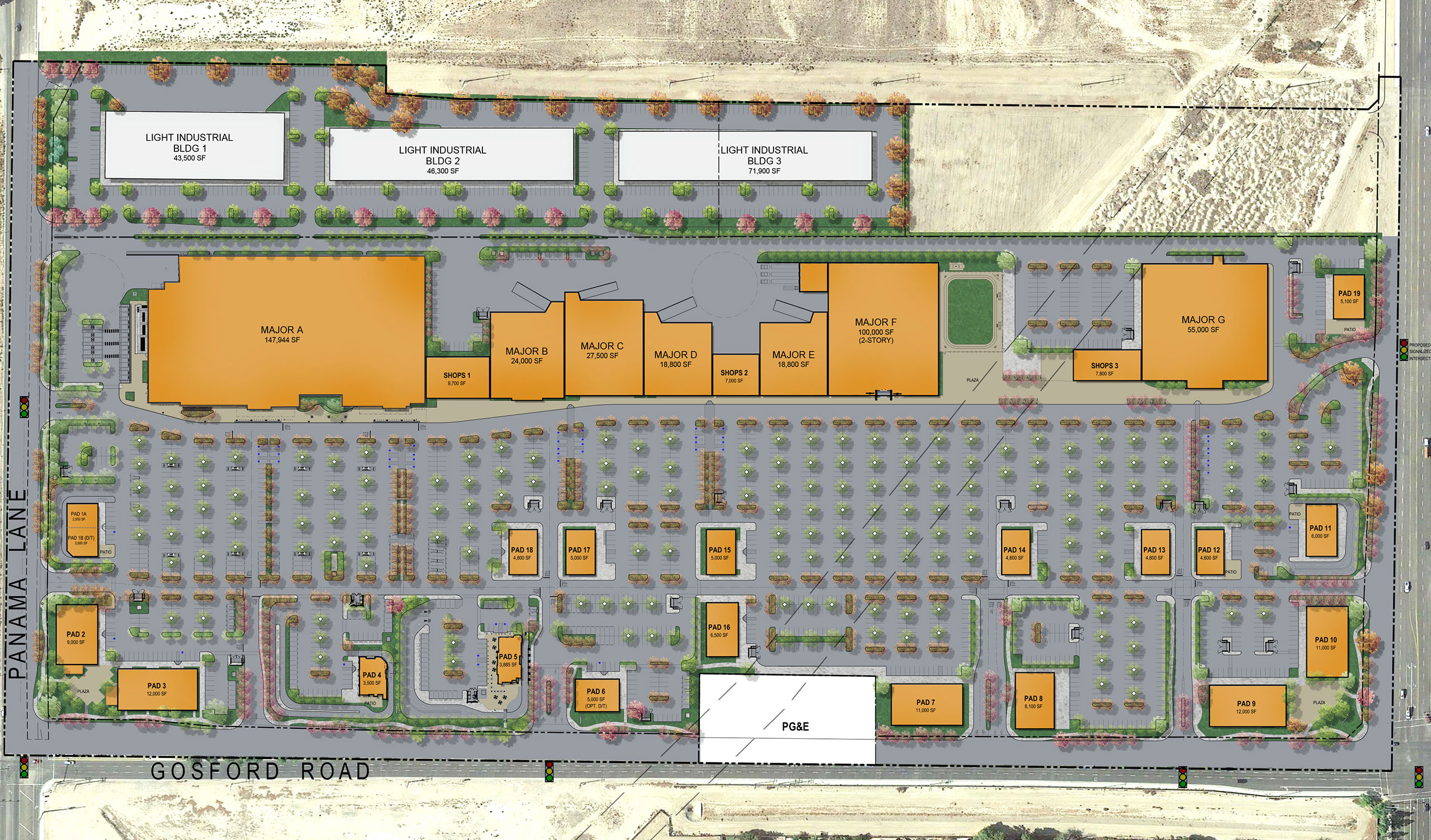 Site plan for Crossroads Plaza in Bakersfield, California, where KTGY applied the Power Allocation Method to meet Title 24 EV charging requirements across a parking field of approximately 2,800 stalls. Phase I of the project is currently under construction.
BUILDING AROUND THE CONSTRAINTS
Starting earlier is a key to mitigating the pain from any new variable, including the updated energy code. Naturally, this extends far beyond submitting plans earlier.
KTGY, for example, is bringing photovoltaic, electric vehicle and energy consultants into the process much sooner than in previous code cycles.
“One of the most common misunderstandings we see is the true scale of electrical infrastructure required under the updated code,” Wernli says. “Owners and tenants often underestimate the capacity needed to support EV chargers, as well as the implications of shifting from gas to electric appliances and higher efficiency HVAC systems.”
These requirements also increase the size of electrical rooms and related equipment, which can take additional footprint out of the building and reduce leasable area, he notes.
“This early coordination [of consultants] has become an essential part of managing the increased complexity of electrical and energy systems under the new code,” Wernli continues.
Asher is also seeing this proactive approach play out.
“The most effective strategies we’re seeing center on early coordination and clearer upfront planning,” he says. “Developers are conducting MEP assessments before marketing space and confirming electrical capacity early, so they understand the true cost of bringing a project into compliance.”
Tenants are also engaging their consultants sooner to evaluate mechanical and electrical needs, Asher notes.
Ayala believes the key to opening faster is to front-load compliance work. This includes assessing the site by carrying out an energy and electrical infrastructure review during due diligence before signing the lease.
“Verifying service capacity for heat pump and EV loads, roof structural adequacy and kitchen panel sizing for QSR operators is inexpensive before lease execution and very expensive after,” he adds.
The front-loading strategy should also include initiating utility coordination on Day 1 of pre-construction, as well as scheduling acceptance testing early. For operators with a national presence, localizing their prototype before a California rollout begins is critical.
“A prototype that permits cleanly in Texas, Florida or the Carolinas requires redesign — sometimes substantial [redesign] — before it can be submitted in California,” Ayala notes. “The delta between California and every other state has widened with each code cycle.”
Those who don’t heed this advice can face some major delays if their national prototype generates multi-round redesign cycles due to missing heat pump specs, undersized electrical one-lines or QSR panels that don’t meet the 800-amp energy code requirement.
“Four to 8 weeks of redesign before permit isn’t a statistic,” Ayala continues. “It’s what happens when a Texas or Florida retail or restaurant prototype lands on a California plan checker’s desk without anyone having looked at it through a California lens first. I’ve watched design teams burn 6 weeks fixing things that should have been caught in schematic.”
The stakes are particularly high for concepts with thinner margins or heavy mechanical needs. Asher has seen both types of projects become more selective about site conditions and overall occupancy costs since the energy code update.
“Restaurants, fitness operators and experiential tenants are scrutinizing second generation space more closely, and some are delaying expansion until they can secure locations with modern infrastructure,” he says. “Well capitalized tenants continue to grow, but they are prioritizing projects where the building systems already align with current code.”
That’s not to say deals in older centers are dead in the water. They still happen, Asher notes, but only when both parties recognize the true cost of bringing the space up to compliance.
Some have utilized approved alternative compliance measures to manage these new updates more strategically without a major upfront cost. That might mean phasing in infrastructure or designing systems with future capacity in mind, allowing projects to meet code while limiting initial investments.
KTGY employed this approach at Strategies like phased infrastructure and alternative compliance paths can certainly help manage upfront costs, but they don’t allow developers and concepts to hide from the broader shift taking place. To be sure, retail and restaurant buildouts will still happen in California — they always have. But these projects may move forward a little differently, and with more scrutiny around site conditions, infrastructure and long term viability.
The path to opening day is becoming more deliberate — and, in many cases, more selective — as teams work to align design, budget and infrastructure from the outset as they adjust to the new Title 24 Energy Code.