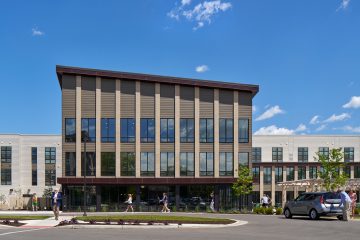
 Flash is out and flexibility is in as multifamily owners try to maximize vital spaces at their properties – and the capital they invest in them.
Today, the consensus on amenities is a simple one. Multifamily developers are done building common area facilities that residents don’t use.
“Between 2019 and 2021, there was a clear ‘arms race’ in amenities with developers continually increasing both the size and quantity of offerings,” explains Steve Shaver, senior vice president of pre-construction and design based in the Indianapolis office of Thompson Thrift.
“Today, that mindset has shifted.”
Residents still expect high-quality amenities, Shaver clarifies, but there’s greater emphasis on thoughtful design, functionality and overall value. This has led Thompson Thrift and many others to take a more strategic approach, carefully evaluating the size and purpose of each amenity space to ensure it enhances the resident experience without unnecessarily increasing costs.
And cost is precisely what’s driving this latest trend, as owners pivot from the bigger-is-better mindset toward data-driven decisions that deliver measurable value to residents. “Affordability is forcing more intentional decision-making,” says Rachael Anderson, vice president of operations for Charlotte, North Carolina-based Madison Communities.
That shift is changing how developers underwrite amenities. Rather than working from a fixed amenity budget, most treat these spaces as strategic investments designed to drive rent premiums and accelerate lease-up. As a result, spending varies widely, but developers typically allocate roughly 2 percent of total project costs or about $4.50 per square foot – toward furniture, fixtures and equipment (FF&E) for amenity and common areas.
Developers are contending with multifamily construction costs that have risen 30 percent over the past five years, with labor up more than 20 percent, according to the Urban Land Institute. Meanwhile, rent growth has slowed to a crawl. CoStar projects a mere 0.2 percent increase in apartment rent growth nationally for the first quarter of 2026, with full-year growth expected to remain below 1 percent.
With rents effectively hitting a ceiling in many markets, the priority for both owners and renters is cost control. Every dollar needs to be justified and stretched, and every amenity must earn its keep.
Beyond baseline FF&E, specialty amenities can add incremental costs. For example, smart package rooms at a 300-unit property can range from about $15,000 to $30,000, while electric vehicle charging infrastructure can cost roughly $3,000 to $12,000 or more per station, depending on installation complexity and electrical upgrades.
Impactful Amenities
Today’s highest-performing amenities are the ones residents use every day, according to Anderson. “The differentiator is no longer just how impressive an amenity looks; it’s how seamlessly it fits into a resident’s daily routine. The amenities residents are seeking revolve around lifestyle.”
That focus on daily use is directly tied to financial performance. Industry data shows that well-utilized community amenities can generate measurable rent lift, with some estimates suggesting increases of roughly 10 to 20 cents per square foot or about $77 per unit on average compared with roughly $52 for unit-specific upgrades.
In a multifamily environment, that means an amenity must allow residents to work, mingle or relax – ideally all three at different times of the day.
Cheryl Stauffer, CEO and principal at Columbus, Ohio-based Crimson Design Group, calls the strategy of intentionally designing spaces to serve different functions at different times “daypart design.” It’s something she’s seeing with increasing frequency.
“It’s a teaching kitchen that hosts a coffee bar in the morning and a cooking class at night,” explains Stauffer. “A lounge that functions as coworking space during the day and a social space in the evening. The key is that the design must support both uses equally well, and it can’t feel like a compromise in either mode.”
Ensuring that a building’s amenities can deliver meaningful value for residents throughout their day is especially important in affordable and workforce housing communities, adds Robert Cuttle, director of asset and property management for Altamonte Springs, Florida-based Wendover Housing Partners. The goal, he says, is to ensure they accommodate everyone.
“For family and workforce housing, amenities should support both work and home life, as well as the lives of residents’ children living in the community,” he notes.
For example, a parent might start the day in a computer center or conference room where he or she can catch up on work, participate in a virtual meeting or search for a new job. When the school day ends, the parent can bring his or her children to the community’s playground or splash pad. Meanwhile, evenings might be spent together in shared spaces, making crafts in activity rooms or playing games and socializing in community gathering rooms.
“Thoughtfully curated amenities meet real needs and help families feel supported and connected every day,” continues Cuttle.
Stauffer adds that when you capture a resident’s whole day, you provide more than flexibility, convenience or community — although those are certainly important benefits. “You give residents a reason to come back,” she says.
This has led to another trend Stauffer sees gaining in popularity — experience amenities. These offerings can include anything from coffee bars with flexible workspaces to fitness centers with climbing walls. The strategy here is for the space to provide a certain energy or vibe.
“The biggest shift is that residents have stopped being impressed by amenity lists and have started caring about how spaces feel,” emphasizes Stauffer.
“A prospect who tours three communities in a weekend isn’t counting amenities; they’re comparing atmospheres and their overall experience. ‘Does the clubhouse feel like a place I’d spend time in? Does the lobby feel like somewhere I’m proud to bring a friend, or does it feel like a corridor with furniture?'”
Tenants Need Workspace Options
One of the biggest post-pandemic shifts affecting both residents and the communities they live in is the rise of the work-from-anywhere trend.
Since roughly 80 percent of U.S. employees with remote-capable jobs currently work in either a hybrid or fully remote arrangement, per Gallup, developers are designing spaces that enable residents to spend more of their day onsite.
“Amenities that allow residents options for remote workspace continue to be popular,” says Shaver, noting there’s high demand for focus rooms situated within clubhouses. “The amenity allows the resident to separate home and work while still maintaining a remote work style.”
Another high-demand item is diversified seating options, according to Benjamin Kasdan, principal at KTGY based in the architectural firm’s Washington, D.C., office.
“We have designed a lot of coworking spaces that utilize a variety of sizes and types of seating arrangements, with banquette seating, booths, small conference rooms and niches, in addition to the iconic communal table,” he says.
The variety makes sense to Stauffer. “When someone can work from a different spot every day without leaving the building, that space starts earning its square footage,” she adds.
Programming Is Key
Fitness centers remain a star amenity, but not the way they used to.
“While a well-designed, modern fitness center still impresses, busy residents often rely on scheduled workout classes, so usage increases significantly when it is paired with programming,” says Alissa Hazan, director of portfolio operations and general counsel at New York City-based The Dermot Co.
That performance can translate directly into value. In some cases, fitness centers alone have been shown to add roughly $115 per month to a unit’s rent value, making them one of the more impactful shared amenities from a return-on-investment standpoint.
Dermot activates its fitness centers with in-demand classes, including yoga, HIIT (high-intensity interval training), dance and others that drive consistent engagement rather than occasional use.
The company is also incorporating more wellness-focused amenities, such as yoga studios, saunas and cold plunges, across its New York City and Florida communities.
“These aren’t just design features, but rather amenities that are most impactful when paired with programming that integrates them into residents’ daily routines, driving both usage and premium positioning,” continues Hazan.
Barbara Jahncke, global director of marketing at Vision Fitness, headquartered in Cottage Grove, Wisconsin, notes that the best way for a fitness amenity to integrate into residents’ daily lives is to ensure there is something for everyone.
“The fitness spaces making the strongest impact today are the ones that feel useful to the broadest range of residents, from beginners who want something intuitive to experienced residents looking for more training variety,” she says.
This goal is best achieved, Jahncke believes, by creating balanced spaces that combine easy-to-use core equipment with a few higher-demand strength or functional options.
“In a multifamily setting, efficiency works best when more residents can walk in and find something that fits their routine,” she continues. “The most effective amenity is the one that feels approachable, current and easy to use on a regular basis.”
It may also be the ones that allow the resident to feel like they’re saving money by staying “home.”
“Affordability pressures have influenced residents at a range of income levels to increasingly prioritize features that replace external spending,” adds Hazan, referring to costs incurred outside the multifamily property, such as gym memberships or coworking-space fees.
To offset those costs, many operators are layering in amenity-related revenue streams. Monthly amenity fees often range from about $25 to more than $100 per unit, while technology packages, which can include bulk internet and smart-home features, can typically generate an additional $75 to $80 per resident, per month.
This might include fitness centers that eliminate gym and studio memberships; coworking spaces that reduce the need for outside office solutions or memberships; and kids’ play areas that act as a substitute for paid activities.
“Ultimately, the goal is to deliver amenities that provide real, everyday value — spaces and services residents would otherwise be paying for elsewhere — while ensuring they remain operationally efficient over time,” she continues. Residents are also treating amenity spaces in apartment buildings as extensions of their own home, particularly as unit footprints trend smaller.
“When someone’s apartment is 600 square feet, the banquette in the lobby where they work on Tuesday mornings becomes their second living room,” notes Stauffer.
The teaching kitchen might also become their entertaining space, while a sky lounge functions as their dining room when guests come to visit. As residents spend more time at home, socializing in these spaces has become a higher priority, which is to say it’s shaping another amenity strategy — and it’s not necessarily a physical one.
“Amenities attract residents, but programming creates a community that retains them,” notes Stauffer. “If your clubhouse doesn’t have a social calendar, it’s bound to underperform.”
Rethinking Use of Space
Large clubhouses are an example of an amenity that’s bound to underperform in today’s maximum-efficiency environment. The same holds true for any other expansive, hollow open space that can’t be activated or filled most hours of the day.
“The oversized, single-purpose clubroom is dying. Honestly, I think it should,” says Stauffer. “The same is true for oversized gym spaces with rows of underused equipment.”
Basketball courts, golf simulators, content-creation studios, traditional business centers and theater rooms — all large, single-purpose spaces — can be added to that list.
“We haven’t designed a movie theater room in at least the past five years,” notes Kasdan. “Reducing the quantity of amenity spaces in terms of size and number of types, while maintaining or even increasing the quality of those that remain seems to hit the sweet spot for preserving resident experience while optimizing construction costs.”
Dermot is doing just that through thoughtful repositioning. This approach led to the conversion of a basketball court into a functional fitness area, the repurposing of a golf simulator into a yoga studio, and the transformation of a workshop into a coworking space to reflect the shift toward more flexible, work-from-home lifestyles.
In essence, it’s taking the amenity spaces of yesterday and making them useful for today’s renters.
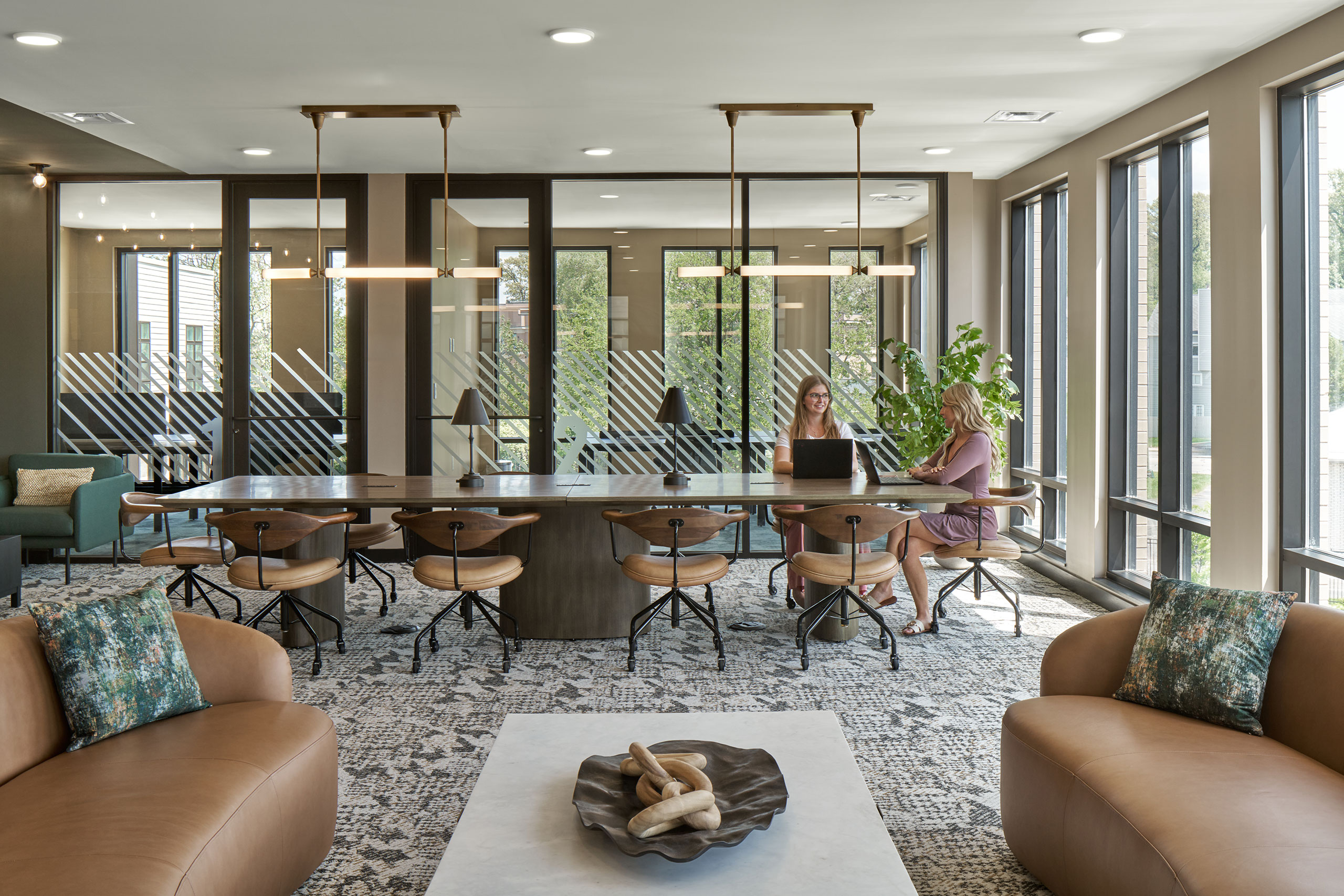 The 87, a KTGY-designed community in South Bend, Ind., features ‘think tanks’ with private and collaborative work spaces
“Underutilized amenities are typically less about the space itself and more about alignment with how residents actually live,” Hazan points out.
“When we look at resident data and usage patterns, we often find oversized or single-purpose spaces like underused lounges or specialty rooms no longer justify their footprint. The opportunity is to reallocate that space toward uses that see consistent, day-to-day demand,” adds Hazan.
Dermot has also enhanced its existing amenities by adding cabanas and fire pits to pool areas, upgrading dog parks and redesigning outdoor spaces to better support recreation and connection. Underutilized rooftops and mechanical spaces at Dermot’s urban communities have additionally been repositioned as lounges and roof decks that take advantage of views and drive more consistent use.
The strategy has paid off for Dermot.
“At one of our communities in Palm Beach County, Florida, this approach to thoughtful amenity repositioning drove meaningful net operating income growth and recently resulted in a sale at nearly 30 percent above the purchase price,” adds Hazan.
Stauffer is a big fan of enhancements and the light repositioning of properties, especially when cost is a factor, as it is nowadays.
“This is actually where smart design makes the biggest difference,” says Stauffer. “Affordability constraints don’t have to mean boring spaces. Instead, the constraints mean you must be more intentional about where every dollar goes.”
Developers can save, for example, by swapping out self-contained, modular elements as renter preferences evolve. The same strategy can be executed with plug-and-play furnishings and flexible infrastructure, as opposed to built-in features that require renovation to update.
Modular furniture – which consists of individual, interchangeable components – is also popular today, as the pieces can be reconfigured for different uses. This could mean the seating is either grouped for event purposes or separated for daily use, or that tables move from coworking spaces to communal dining.
In terms of design, Anderson prefers something evergreen that retains its style. “We focus on timeless appeal that can withstand fleeting trends,” she says.
The biggest amenity trend du jour focuses on revenue generators such as premium parking, private garages, pet services and bulk internet to help offset costs without pushing rents beyond market limits, notes Anderson.
Thompson Thrift has embraced this trend. It offers private offices at several of its new developments that provide reserved workspace at a monthly rate, as well as reserved parking. Both are relatively low-cost amenities to implement, Shaver notes, but can scale with demand, particularly during lease-up and as occupancy and the number of potential users increases.
“[These paid amenities] have helped provide additional income, while adding convenience for our residents,” he notes. Of course, which amenities are added, subtracted, converted or paid depends on the community, the market and the data. Whether any one amenity is working or not depends on the input.
Madison Communities keeps its finger on the pulse of amenities through feedback from residents and team members. “What amenities are being used? What do residents want? The industry is moving away from just sheer quantity and toward intentionality,” observes Anderson.
“The communities that perform best are not those with the most amenities,” Anderson points out, “but those that have the right mix, are designed around real resident behavior, and are executed efficiently.”