With an increasing number of Americans moving to warmer climates and a growing number of warm days each year requiring the use of cooling systems, energy consumption from air conditioning has increased in recent years. As the effects of climate change become more urgent, environmental standards have become more comprehensive, requiring new construction to integrate energy reduction and on-site energy generation strategies.
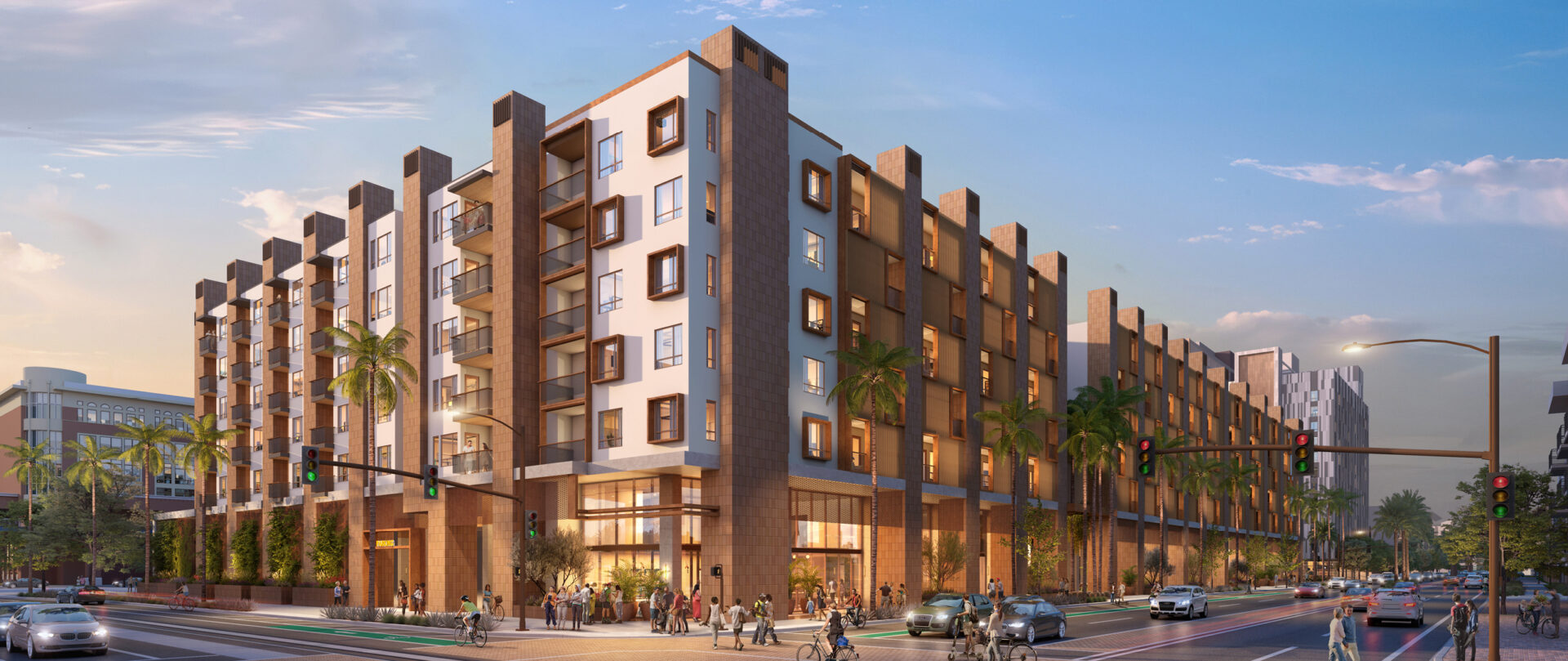
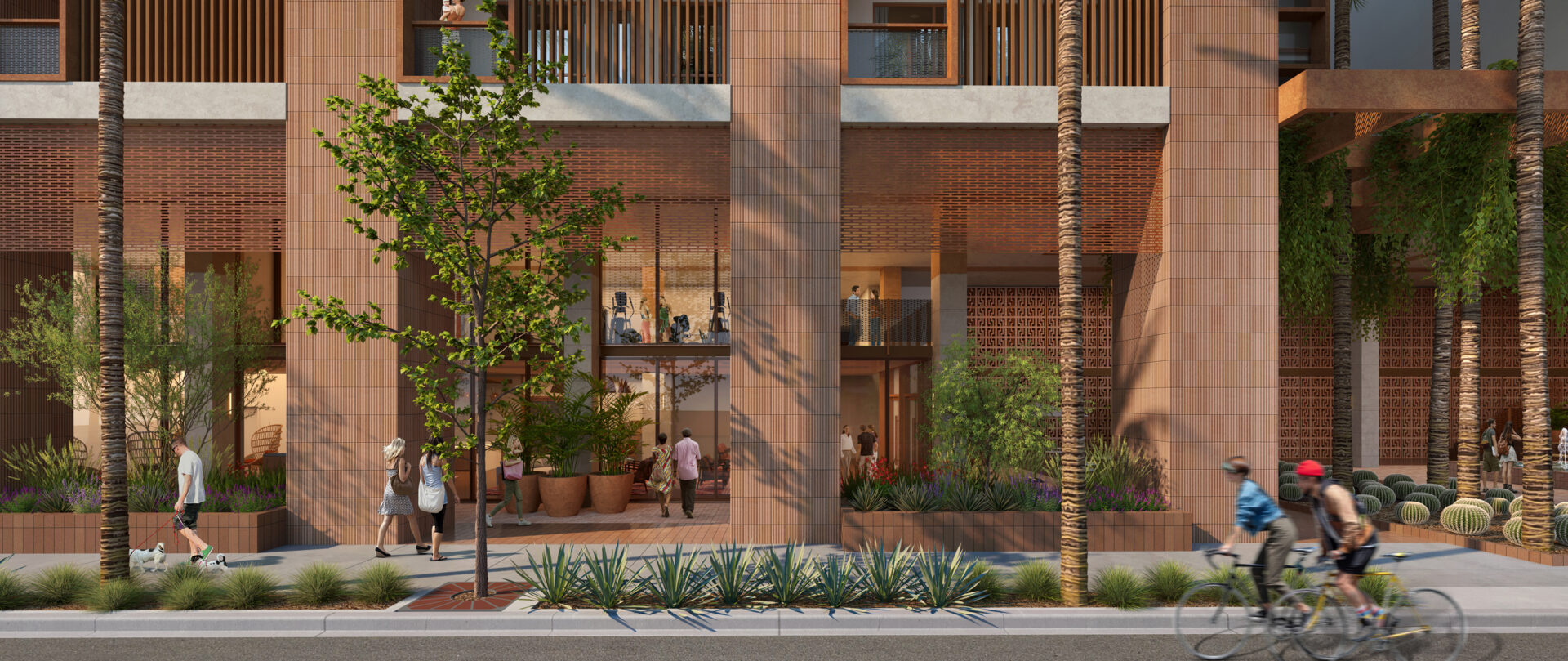
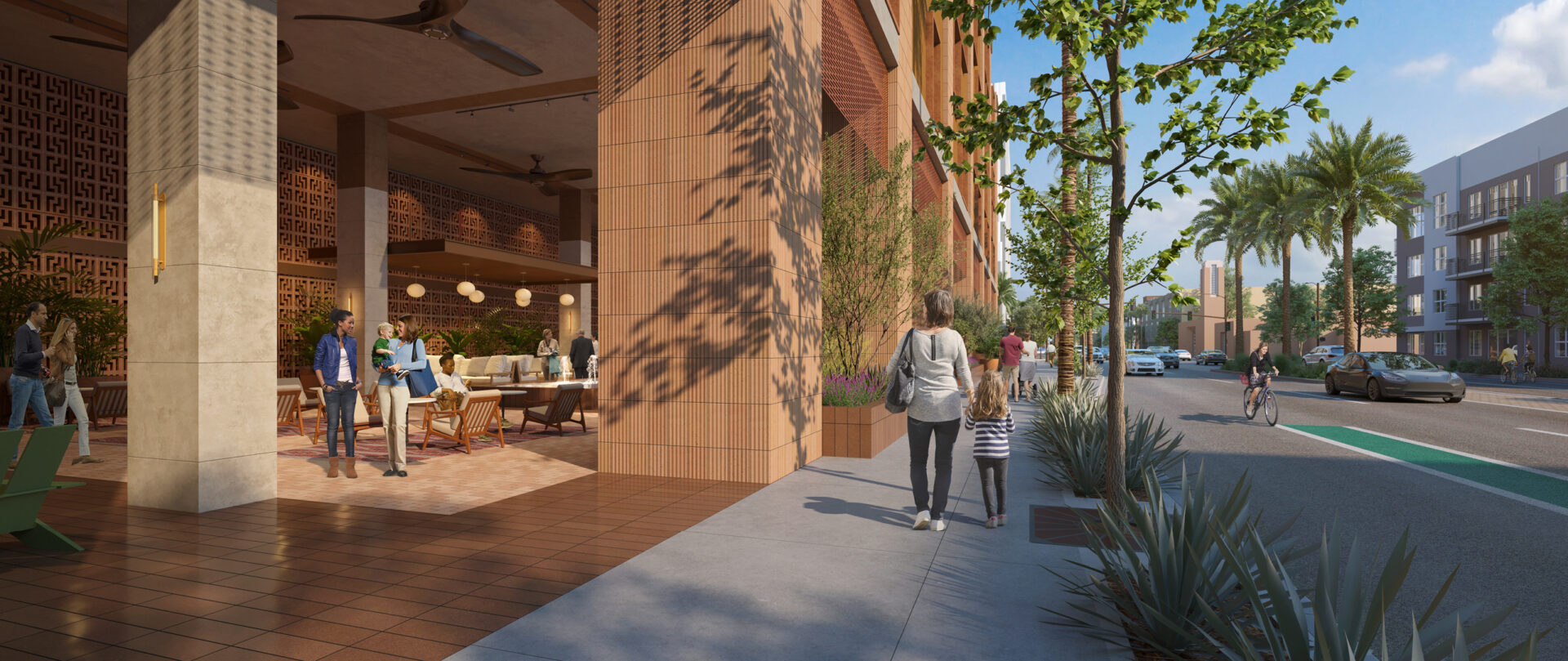
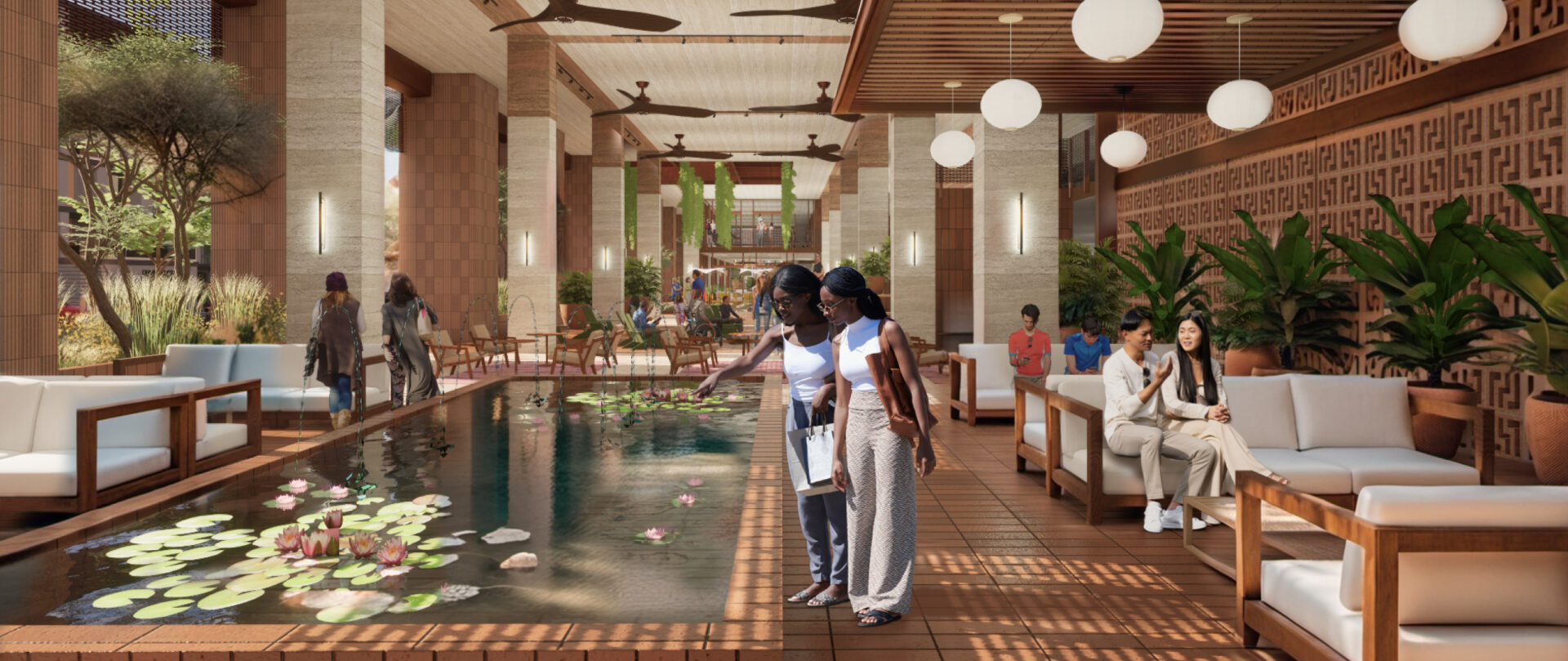
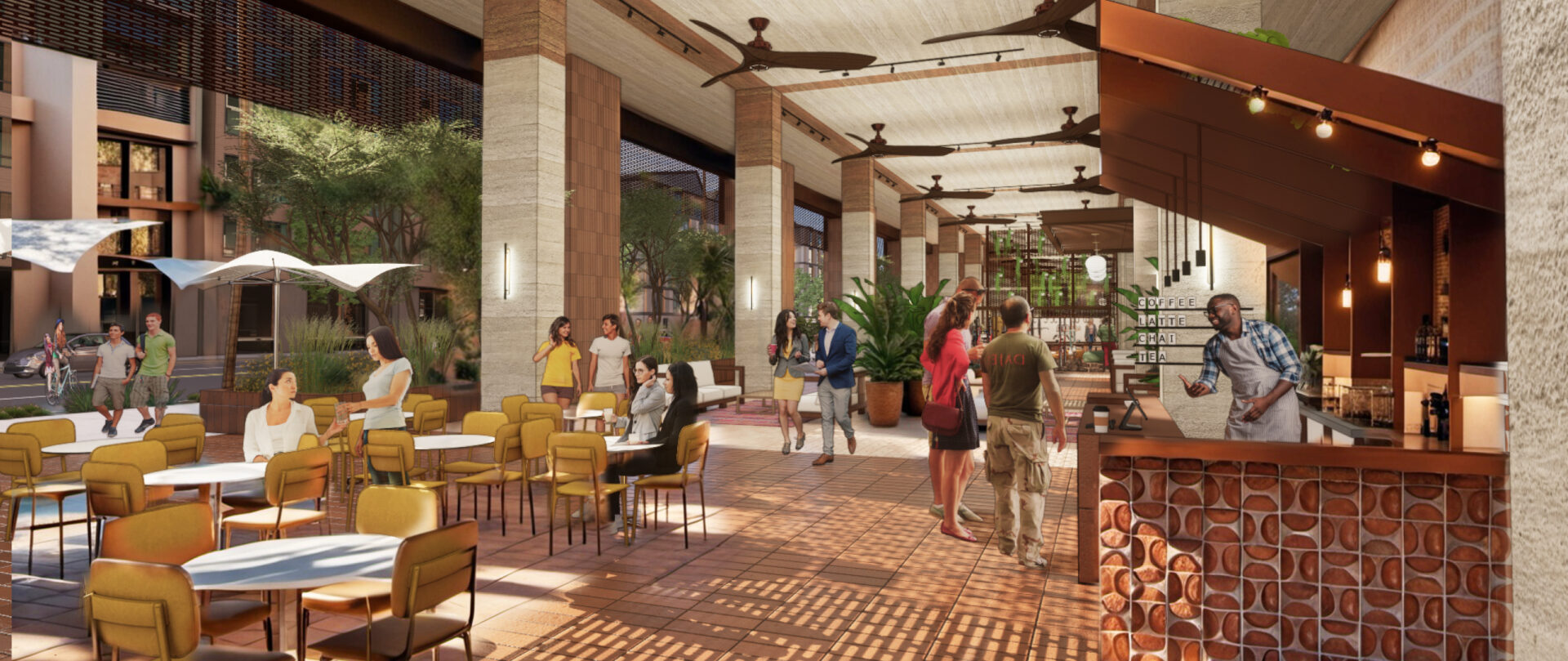
KTGY’s research and development concept, Elements, explores how natural and historic methods for cooling buildings in hot, dry climates can be adapted to modern multifamily buildings. The concept design considers the influence of sun, water, air, and earth in regulating temperatures and aims to reduce reliance on mechanical cooling systems.
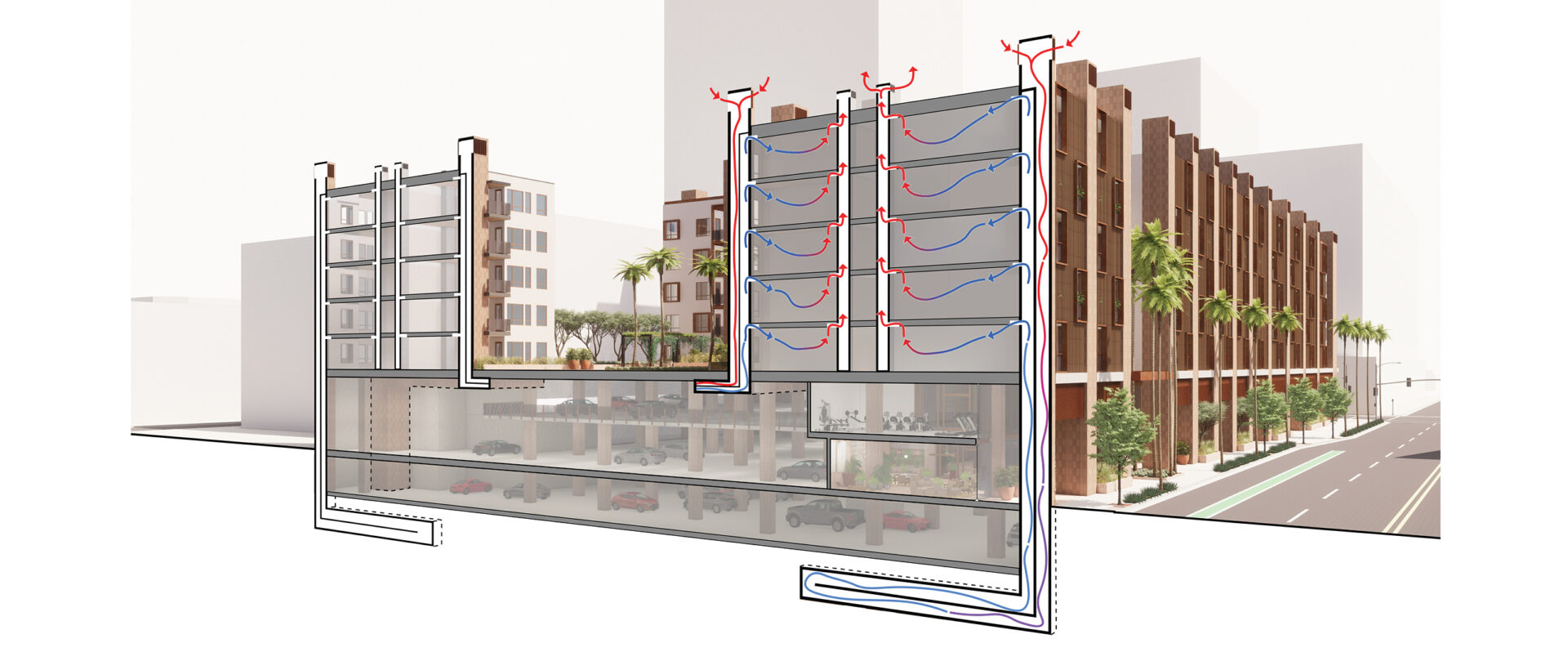
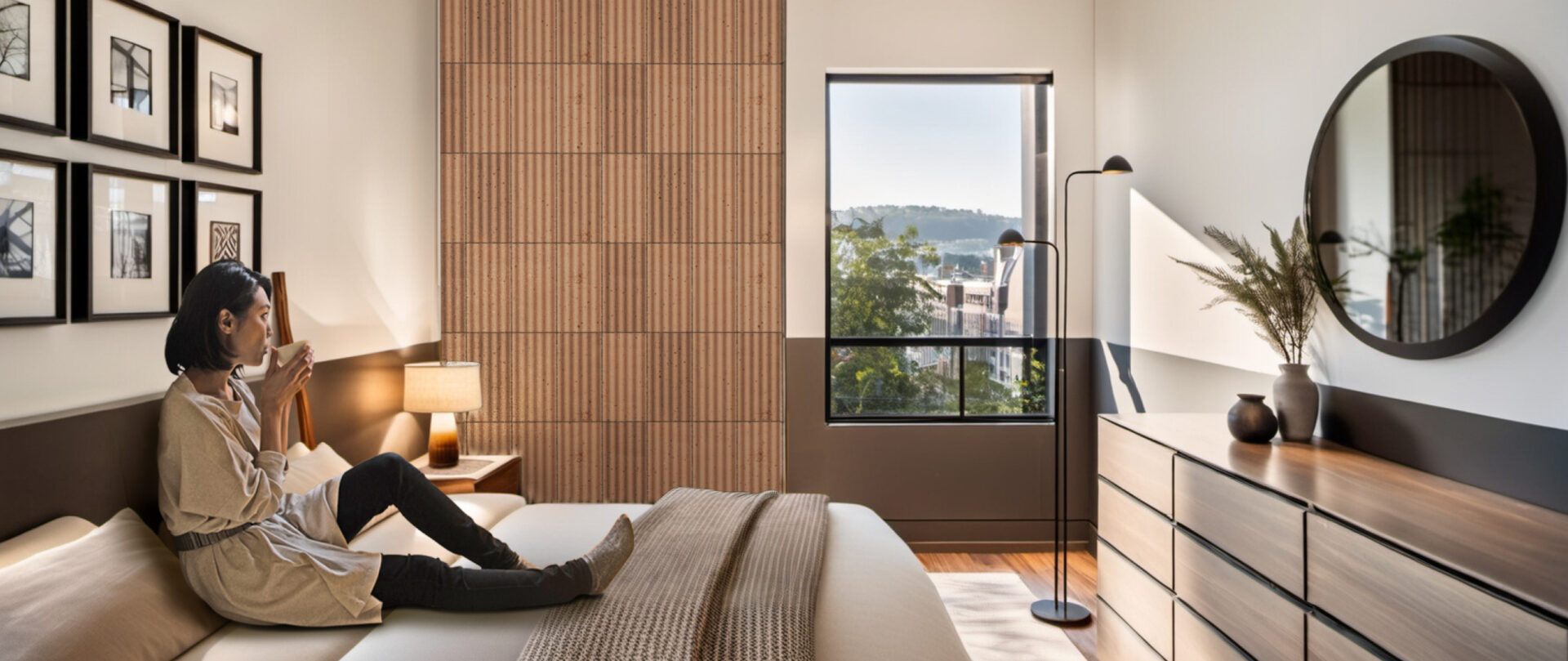
In addition to passive cooling strategies such as solar shading, building orientation, and evaporative cooling, The Elements design concept proposes naturally ventilating units using a system similar to those seen in termite mounds and middle eastern windcatcher designs. Shafts along the exterior façade of the building draw the air down below the subterranean level where it is cooled by the thermal mass of the underground soil combined with the insulated precast concrete structure of the intake shafts. The cooled air then enters the units along the exterior facade and mechanical fans help move the air through, cooling the residential interior spaces. As the air warms, it exits through exhaust shafts along the corridor side of the units.
Sustainability goals remain ambitious and demand ongoing creativity in design. Especially in challenging climates, adopting a combined approach that integrates both traditional and innovative strategies is essential for achieving current and future energy reduction targets.