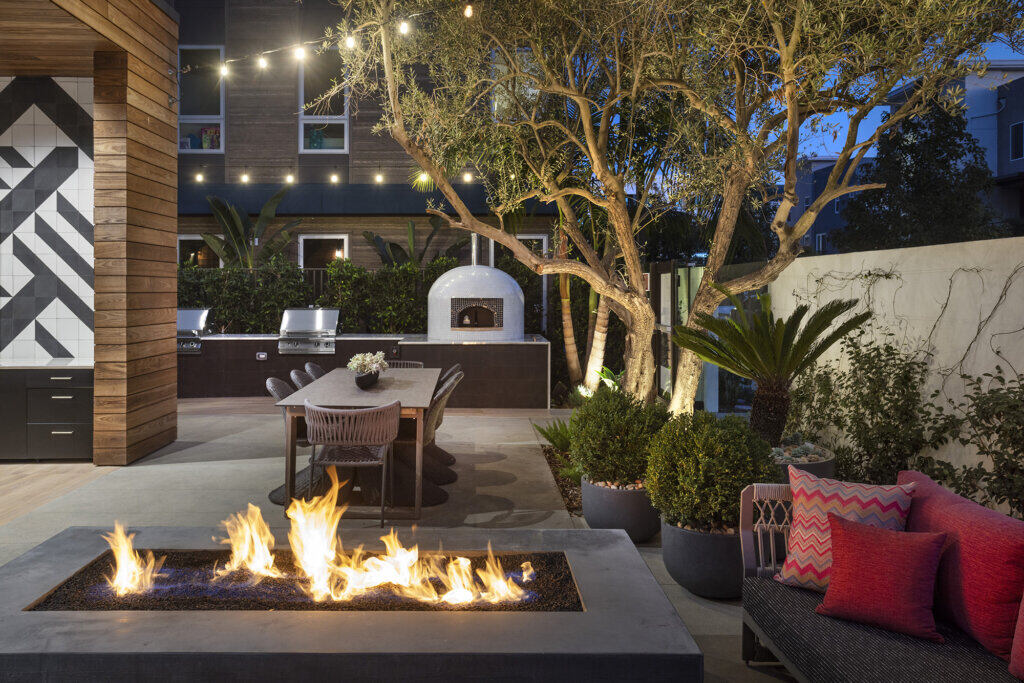
At Broadstone Edition in Irvine, California, outdoor amenities include a fire pit, a pizza oven, and shared dining spaces designed for comfort and social connection. (Adrian Tiemens)
In 2026, multifamily design is moving beyond check-the-box amenities. There’s growing consensus that underperforming spaces—large lounges, minimalistic gyms, and inflexible coworking areas—no longer justify their footprint. Instead, architects and designers are delivering more intentional amenities that combine wellness, convenience, flexibility, and hospitality to drive engagement and measurable return on investment (ROI).
“Traditional amenities like generic clubrooms, oversized lounges, or standard gyms are no longer performing at the level they once did. While still included, they are being reimagined to support today’s priorities: wellness, resident engagement, and physical use,” says Phyllis Hartman, founder and principal of Hartman Design Group. “Multifamily design in 2026 will be defined by a strong emphasis on resident well-being, long-term sustainability, and personalized comfort. It will move away from sterile minimalism toward more human-centered, authentic, and timeless environments.”
Megan Valentine, director of sustainability at KTGY, echoes the importance of flexibility when it comes to amenities and common areas.
“Amenity trends shift so frequently that flexible spaces consistently outperform hyper-specific ones over the life of a building,” she notes. “Spaces that can adapt to future trends without major renovation are inherently more sustainable. This aligns with the movement toward self-contained elements that can be swapped out over time.”
Jonathan Delcambre, residential practice area leader at Gensler, shares that multifamily properties are evolving after having followed traditional models for hospitality and wellness for well over two decades.
“Today, the large conference room with one table and 10 chairs is being replaced with smaller spaces and quiet pods for privacy. Hybrid workers have introduced a new dynamic for the workday, requiring spaces in and around their residences to get tasks done, hold meetings, etc. Privacy, flexibility, and variety have become the norm,” he says. “This applies to wellness amenities in multifamily properties as well. Large resort pools have been replaced with lap pools, saunas, and even cold plunge pools.”
Delcambre also says you start to see positive ROI when a program of amenities becomes a destination for renters rather than another add-on. “It becomes an attraction; something they look forward to revisiting repeatedly,” he says. “We tend to see this when amenity programs combine physical offerings with wellness-focused programming. But we’re always after measurable outcomes backed by scientific validation and designed with transparency.”
Other design features and amenities are falling by the wayside.
“Amenity spaces are shifting away from built-in elements toward self-contained, plug-and-play units that can be swapped out as trends change,” notes KTGY principal Kyle Millar. “Rightsizing is critical: Fewer amenities executed well are preferable to many undersized or oversized spaces.”
Daniel Gehman, director of multifamily at Ware Malcomb, adds two popular trends that may be losing their appeal to renters and operators.
“I’ve heard recently about owners removing pickleball courts and replacing them with something that doesn’t create a noise nuisance,” he says. “I’ve also heard a little fatigue surrounding speakeasies and the extent to which they’re actually used.”
For Gehman, the must-have amenities include a fitness center, pet amenities, a lounge area with a vibe between a hotel lobby and hip coworking space, and a rooftop deck.
“I expect resident price sensitivity to continue to be a big driver for the next couple of years. With rents flat and/or occasionally declining in some markets, developers are asking, ‘What’s the bare minimum of amenities we can provide without losing potential residents?’ No one has a crystal ball with which to answer this question; it’s really rather more like alchemy, in my opinion,” he adds.
Architects and interior designers reveal their top amenity and design trends shaping multifamily communities in 2026.
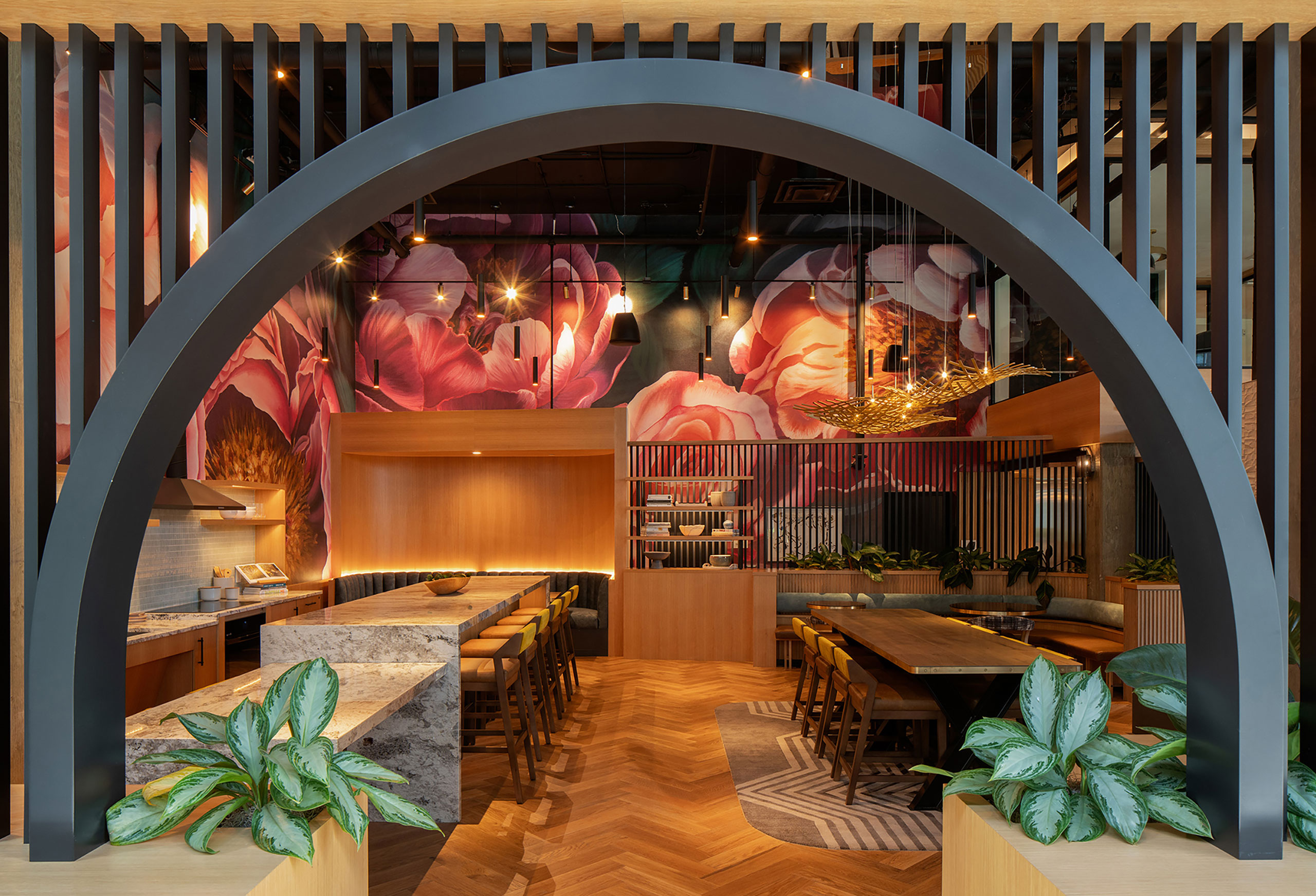
Atwell on Spring is a 375-unit community in Silver Spring, Maryland, with art-driven design woven throughout its amenity spaces. (Seamus Payne)
1. Finishing Touches
Biophilic and natural elements remain strong in multi-family community designs, note Hartman and Millar.
“Expect intent-driven use of wood, stone, natural textures, murals that emulate nature, and indoor/outdoor connectivity,” says Hartman. “Large exterior views, operable walls, and curated plantings (real or synthetic) support the growing desire for a strong connection to nature.”
In addition to wood, plants, and earth tones integrated throughout, Millar says finishes are trending toward texture, including fluting, 3-D wall coverings, and busy wallpaper, used as accent walls instead of bold paint colors.
He notes murals are increasingly being incorporated into architecture as focal points.
According to Millar, decorative lighting also is more architectural, with cove lights, washes, and integrated elements complementing textured finishes and art. When it comes to smart lighting, Hartman adds that expansive windows maximize natural light and reduce energy use. Paired with LED and occupancy-sensor systems, this can further reduce electrical costs.
When it comes to designing amenity and common spaces, Hartman suggests looking outside of the property.
“Multifamily interiors are increasingly reflecting local culture, geography, and history,” she says. “This elevates the experience beyond ‘general luxury’ and creates memorable, identity-rich environments.”
2. Sustainability Practices
Practices that improve building performance and resident comfort, with many being codified into requirements, continue to shape multifamily design.
Valentine says the biggest opportunity continues to be around the building envelope and orientation.
“This includes things like glazing ratios, window placement, and shading strategies that balance daylight, views, and heat gain,” she shares. “These aren’t new ideas, but they remain underutilized and have a substantial impact on operational costs and resident comfort.”
Valentine also points to low-carbon choices for structural and finish materials as well as all-electric systems.
“Electrification is accelerating in many markets due to regulation and incentives, though adoption remains uneven. High-performance heat pump systems and induction cooking improve indoor air quality and align with renewable energy goals,” she adds. “While this is arguably the most visible shift in sustainable design and construction today, it is difficult to call it a trend since adoption is being codified, making it mandatory in many regions rather than optional.”
3. Wellness Drivers
Amenities focused around wellness have evolved from an optional luxury to an expected necessity, says Delcambre.
“Beyond simply being functional, new spaces today must involve unique, tailored experiences for the user,” he says. “When it comes to wellness, we will see more integration of things like biophilic elements, acoustics (white noise integration), circadian lighting, enhanced air quality, and thermal comfort to prioritize sleep and stress reduction.”
Hartman agrees, saying spaces that support both physical and mental health will continue to expand in multifamily.
“This includes meditation rooms, yoga studios, sound therapy rooms, steam and aromatherapy showers, cold plunges, saunas, and advanced in-unit wellness features like enhanced air filtration and acoustic comfort.”
Delcambre adds that layouts are being designed for movable equipment and convertible studio spaces. “Spa zones, saunas, and massage therapy spaces are increasingly becoming the norm,” he says.
4. The Great Outdoors
Exterior activity areas continue to be must-haves for renters, with Hartman noting the elements extend the usable amenity footprint and can serve as primary social hubs.
“Outdoor activity zones remain exceptionally desirable, including pickleball courts, outdoor fitness areas, fire pits, lounge zones, kitchens, and gaming areas,” she says.
Millar adds that outdoor yoga and ropes are gaining traction in multifamily communities, while pools, cabanas, barbecues, and year-round hot tubs remain popular.
In addition, he notes that rooftops continue to be among the most popular amenities for residents, “offering views, social space, and outdoor lifestyle appeal.”
In addition to the outdoor amenities on-site, according to Millar, properties are starting to incorporate gear rooms, allowing residents to borrow kayaks, paddleboards, lawn games, and camping equipment.
5. Pet-Centric Priorities
Pet amenities for Fido and Fluffy are getting even more extensive in multifamily communities.
Hartman says beyond dog wash stations, she is seeing communities add full-service pet spas, plumbed hydration stations, indoor playrooms, and designated outdoor relief and play areas.
“Dog parks are being designed for legitimate play and socialization, with enough length for fetch and sprinting, fencing with vestibules, water features, waste stations, and seating for owners,” says Millar. “Ground-level placement is preferred to minimize regulatory and operational challenges.”
6. Delivery Dilemmas
Parcel storage continues to expand with lockers and overflow closets to handle peak demand, says Millar.
“With skyrocketing delivery volume, package rooms are being intentionally designed as secure, aesthetically integrated amenities rather than utilitarian afterthoughts,” notes Hartman.
Package solutions also are evolving to today’s instant delivery environment.
“Consumer behavior and expectations have evolved when it comes to food and parcel delivery. The accessibility and efficiency of delivery systems such as DoorDash and Amazon have intensified demand for those services and created new ways of enhancing them,” says Delcambre. “Whereas dinner was previously left on the doorstep, multifamily properties are now creating temperature-controlled drop spaces for meals and groceries. Cold storage can also apply to non-food parcels that require refrigeration.”
7. Creative Spaces
Hartman says a new feature emerging in multifamily communities is the addition of creative engagement spaces—such as areas for light woodworking, crafting, painting, gift wrapping, and culinary demonstrations—that reflect renters’ growing desire for mentally restorative activities.
“One of the most unique amenities we’ve seen integrated into multifamily developments has to be content creation rooms featuring acoustic and backdrop elements for TikTok, YouTube, and podcast influencers,” adds Delcambre. “These and other makerspaces have become especially attractive to millennials, who are heavily invested in online monetization.”
8. Flexible Workspaces
The designers and architects agree that underutilized tables are being transformed into micro-offices or pods with good lighting and acoustics.
“Coworking spaces are evolving into enclosed booths for one to three people, offering variety and privacy,” says Millar. “While in-unit workspaces are declining, community coworking areas remain popular, providing socialization and separation of work from home.”